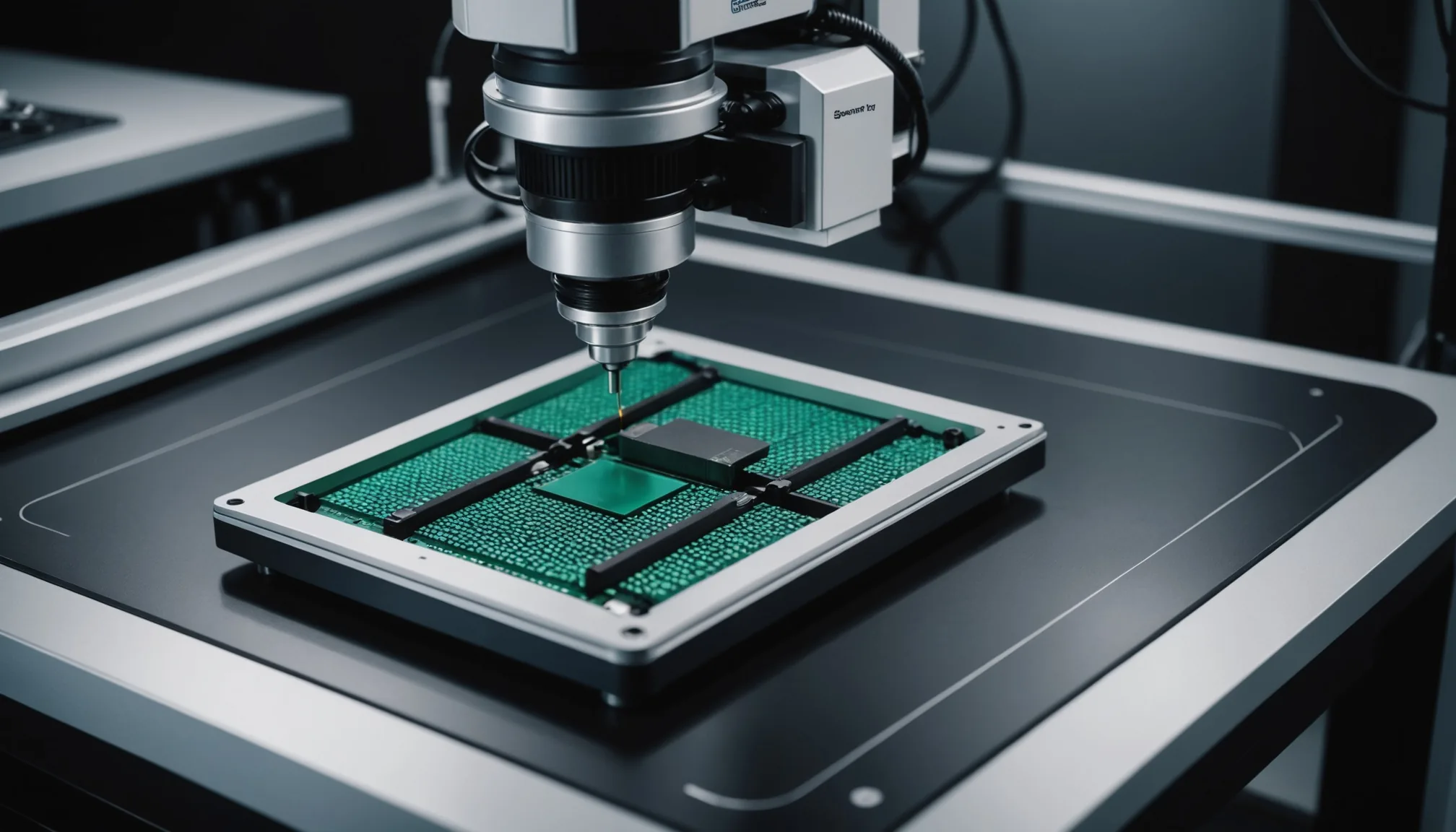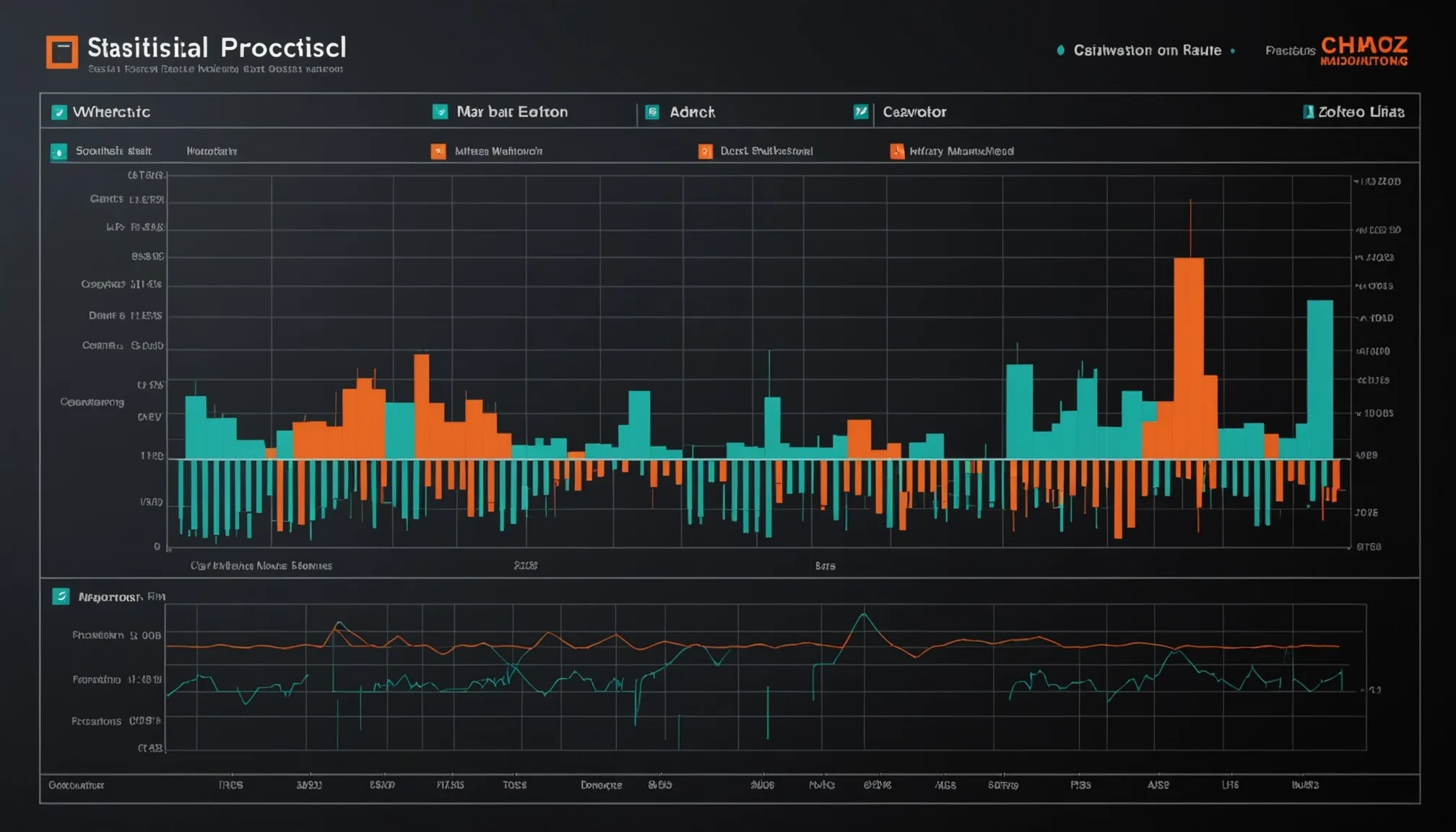

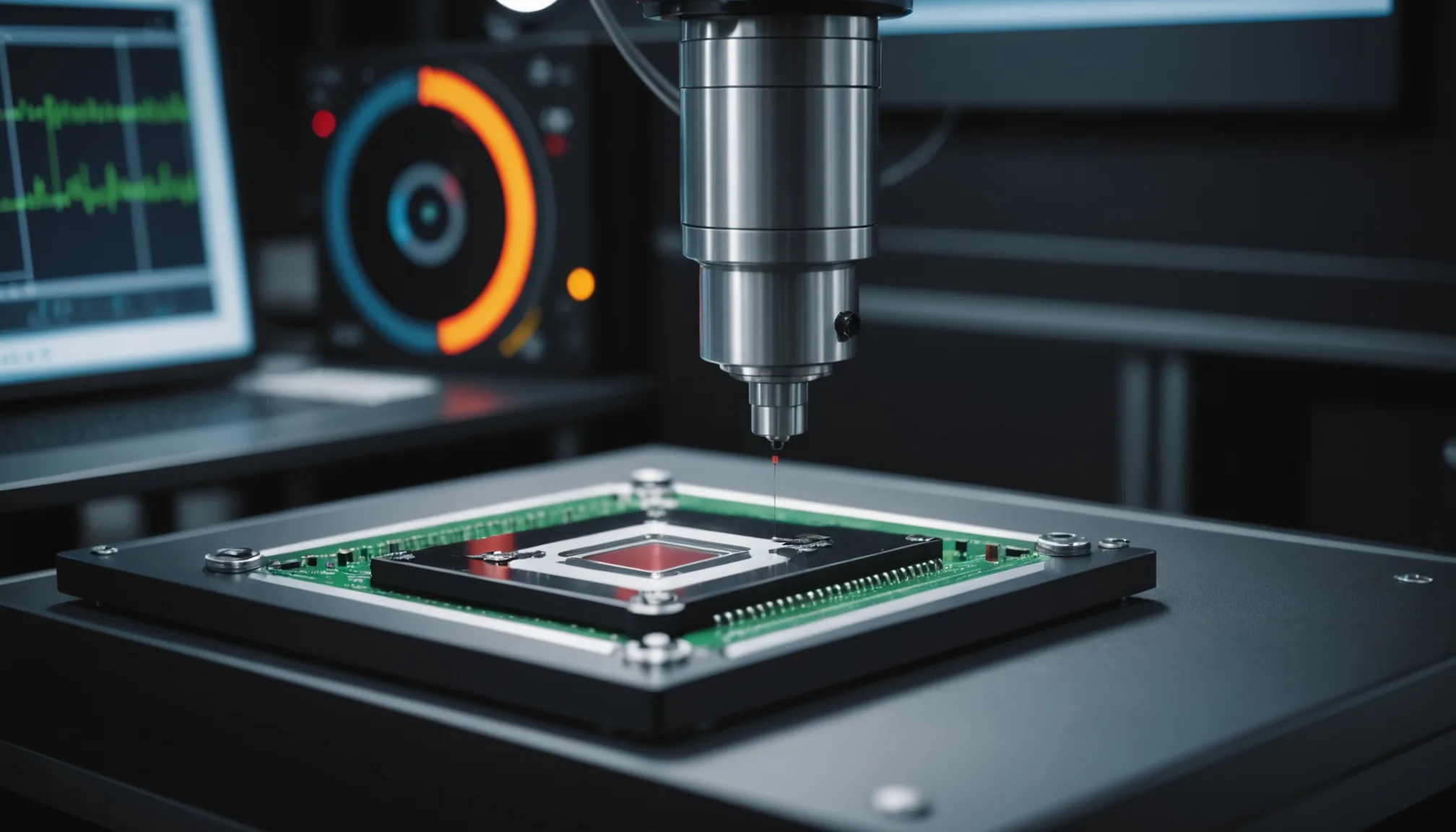
Endpoint detection is one of the most information-dense signals coming off your etch tools. Yet in most fabs we've worked with, that data stream flows into a silo: the process engineer monitors it for etch stop confirmation, the run passes, and the trace gets archived. No one correlates it with defect inspection results or final die yield until something breaks badly enough to trigger a formal investigation.
That lag is expensive. In our experience, endpoint drift precedes a defect excursion by anywhere from 4 to 18 hours across common dielectric and poly etch flows. The signal is there. It just isn't being read in the right context.
What Inficon Endpoint Detection Actually Measures
Inficon systems used in production etch monitoring typically operate on two complementary sensing modalities: optical emission spectroscopy (OES) and full-spectrum interferometry. OES monitors the intensity of specific emission lines in the plasma plume. As the etch proceeds through a target layer and begins consuming the underlying stop layer, the chemistry changes. That transition appears as a slope change or peak inflection in the monitored emission line.
The specific line monitored depends on process chemistry. For silicon dioxide etch in fluorine-based plasmas, the CO emission at 483.5 nm is a standard endpoint marker. For silicon nitride, you're typically watching CN at 387 nm. Poly silicon etch in chlorine-based chemistry produces measurable SiCl emission changes as the etch front reaches the gate oxide. Inficon's Transpector and Composer platforms can track all of these simultaneously across a configurable spectral window.
Interferometry operates differently. A laser is directed at the wafer surface; the reflected beam creates interference fringes as the film thickness changes. Each fringe crossing corresponds to a known thickness removal. This gives you real-time etch rate, not just a binary stop signal. Fact: on a well-calibrated tool with a stable process, interferometry etch rate repeatability can hold within 1.5% across a 25-wafer lot. When you start seeing >3% variation lot-over-lot, that's worth documenting before the next qualification run.
How Endpoint Drift Precedes Defect Excursions
Here's the thing about endpoint drift: it doesn't produce bad wafers immediately. The etch process has process margin built in. A 2-second shift in endpoint time on a 60-second etch doesn't cause a yield loss at first. But that shift tells you the chamber is changing. Something is different about the plasma environment today versus two weeks ago. Polymer deposition on the chamber walls, a slow change in RF matching, subtle degradation in gas delivery timing.
We've seen this pattern repeatedly: endpoint time drifts outside 2-sigma control limits on a Tuesday. The process engineer gets notified, runs a monitoring wafer, everything looks acceptable. By Thursday, defect inspection starts showing micro-loading artifacts on dense features. By Saturday, the lot reject rate crosses the excursion threshold and the chamber gets pulled for wet clean.
The endpoint drift and the defect excursion are the same root cause. The endpoint data was the early warning. The defect data was the confirmation, arriving 48 to 72 hours later.
The diagnostic value comes from three specific signal patterns:
- Endpoint time drift: Gradual increase or decrease in time-to-endpoint across a lot or across consecutive lots. This reflects etch rate change. Usually tied to chamber condition or incoming film thickness variation.
- Endpoint signal sharpness degradation: The inflection slope of the OES endpoint curve becomes less distinct. Sharp endpoints indicate clean etch stop; soft endpoints indicate layer intermixing or early over-etch of the stop layer. When slope sharpness drops below a process-defined threshold, selectivity is degrading.
- Endpoint uniformity across the wafer: On interferometry-capable tools, you can resolve the endpoint event at different radial positions. Edge-center timing offset greater than approximately 3 seconds on a 300mm wafer often correlates with radial uniformity failures on defect inspection. This is particularly relevant for contact and via etch at feature sizes below 28nm.
Inficon Data Export Formats
Connecting endpoint data to yield workflows starts with understanding what format the data comes in. Inficon platforms support several output paths, and which one you're using determines the difficulty of correlation work.
| Export Method | Format | Timestamp Precision | Notes |
|---|---|---|---|
| FTP/SFTP push | CSV or binary .idf | Millisecond | Default for SECS/GEM-connected tools; one file per lot or per wafer |
| SECS-II/GEM event report | SECS message stream | Second | Captured via MES/APC; endpoint event code and summary stats |
| Inficon Data Manager API | JSON via REST | Millisecond | Available on newer Composer/Transpector3 firmware; enables on-demand pull |
| Manual export (GUI) | Excel or PDF | Second | Operator-initiated; not suitable for automated correlation pipelines |
For automated yield correlation, the FTP push or REST API path is what you want. The binary .idf format contains the full waveform trace, not just the endpoint event summary. That waveform is what you need for slope analysis and soft-endpoint detection. If your MES is only capturing the SECS endpoint event, you have a summary stat, not the full signal. That distinction matters a lot when you're doing post-excursion root cause work.
Aligning Endpoint Traces with Defect Inspection Timestamps
This is where most correlation projects stall. The endpoint trace has a timestamp in the tool's local clock domain. The defect inspection result has a timestamp from the inspection tool. These clocks are rarely synchronized to better than ±30 seconds without active NTP management, and in older fab environments, you might see 5 to 10 minute offsets.
The right alignment key isn't wall-clock time. It's the lot ID and wafer slot number. Inficon exports embed both in the file header. Defect inspection results carry the same lot/wafer identifier through the SECS data stream. Join on those, not on timestamps, and you get a reliable many-to-one relationship: one endpoint trace per wafer per etch step, one defect map per wafer per inspection step.
Honestly, the timestamp confusion is the single most common failure mode in endpoint-to-inspection correlation pilots. Teams spend weeks trying to reconcile time zones and NTP offsets when the answer is two rows in a join key table.
Once joined, the correlation structure looks like this:
- Extract scalar features from the endpoint trace: endpoint time, slope sharpness metric, edge-center offset if available
- Extract defect map features from inspection output: defect density by region, defect type classification if available, radial uniformity metric
- Join on lot ID + wafer slot, add downstream yield as a third table if available
- Run Spearman rank correlation between endpoint features and defect/yield outcomes
In our data, endpoint slope sharpness is typically the strongest leading indicator. Endpoint time is noisier because it conflates incoming film thickness variation with etch rate variation. Slope sharpness isolates the selectivity signal.
Specific Etch Process Signatures Worth Watching
Not all etch processes produce equally readable endpoint drift patterns. Based on what we've seen in production yield work, the highest-value processes to instrument are:
Contact/via etch (oxide etch, high aspect ratio): Endpoint time drift correlates strongly with contact resistance yield loss. The mechanism is over-etch of the underlying barrier or liner. A 4-second endpoint time increase on a 45-second target etch should be treated as a leading indicator for electrical yield degradation in the contact module. We've quantified this as roughly a 0.8% yield point per second of systematic endpoint shift in one process node we analyzed.
Poly gate etch: The end-of-etch OES trace on poly gate processes typically shows a two-stage inflection: one as the etch transitions from hard mask to poly, one as it approaches the gate oxide. The relative timing between these two inflections encodes information about hard mask consumption rate. When that interval compresses, you're consuming hard mask faster than nominal, which typically indicates a plasma density increase. That condition correlates with gate edge roughness and subthreshold slope degradation. Not every fab measures this. They should.
STI etch: Shallow trench isolation etch in silicon uses both endpoint detection and time-controlled overetch. The OES endpoint confirms nitride clearing; the subsequent timed etch determines final trench depth. Drift in the endpoint event shifts the start reference for the timed overetch. A 3-second endpoint drift on a 90-second total etch sequence effectively changes your target trench depth by approximately 5%, which falls directly on active area isolation margins.
Metal etch (Al/W): Harder to work with because OES signal-to-noise is lower on metal etch than on dielectric. But endpoint sharpness degradation on tungsten plug etch is a reliable indicator of chamber wall condition. When etch byproduct loading on chamber walls increases, tungsten etch rate drops and the endpoint event becomes softer. We've used tungsten endpoint sharpness as a chamber maintenance predictor with about 85% accuracy on a 14-day prediction window.
Building This Into Your Yield Workflow
Endpoint-to-yield correlation doesn't require a massive infrastructure project. Start with one chamber, one process, one defect inspection step downstream. Get the join key working. Validate that your endpoint trace files are being archived with complete lot/wafer headers. Run the Spearman correlation on three months of historical data. If you see a coefficient above 0.4 on endpoint slope sharpness versus defect density, you have a signal worth operationalizing.
From there, the operational step is setting a control limit on the endpoint feature that corresponds to your defect excursion threshold. When the endpoint metric crosses that limit, you flag the chamber for review before the next inspection results arrive. That's the 4 to 18-hour advance warning window. Simple as that.
The fabs that do this well treat endpoint monitoring as a first-class data stream, not a pass/fail interlock. They archive the full waveforms, they compute derived features, and they run ongoing correlation checks against downstream inspection. The information content is there. The question is whether you're reading it. In our work, adding endpoint features to defect prediction models improves model accuracy by 15 to 25% compared to process recipe and environmental data alone. That's not a marginal improvement. That's the difference between catching an excursion shift and missing it entirely until it shows up on a wafer map.