Defect patterns, classified.
Yield decisions, accelerated.
Wafertune identifies defect signatures in your wafer maps using a purpose-trained ML model — results in your data pipeline in under 3 seconds.
Three steps. One API call.
Wafertune plugs into your existing data pipeline without additional infrastructure.
Send your wafer map
STDF, CSV grid, or image upload via REST API. No preprocessing required — Wafertune handles format normalization.
Model classifies patterns
Convolutional spatial analysis runs against Wafertune's 180+ pattern taxonomy. Confidence scores assigned to each detected signature.
Structured response, your pipeline
JSON labels, confidence scores, and spatial coordinates — ready for your yield management system or custom analysis workflow.
From the model's training data
Each pattern class is documented with its spatial signature, process origin, and confidence characteristics.
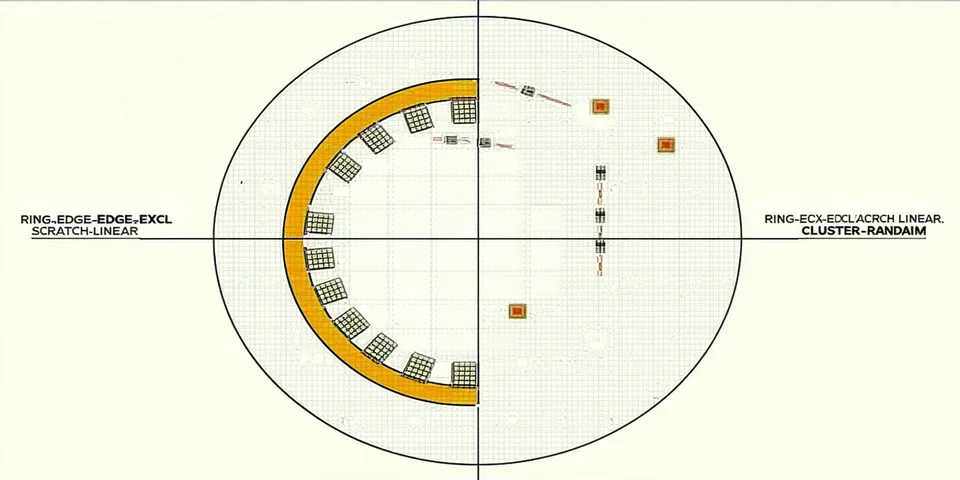
Ring of flagged dies at wafer periphery. Edge bevel contamination or edge-focused etch profile.
Diagonal line of flagged dies. Wafer handling artifact or CMP pad scratch mechanism.
Localized cluster of failed dies without spatial regularity. Particle fallout during deposition or etch.
Periodic repeating defect pattern aligned to reticle field boundaries. Reticle contamination signature.
Integrate in an afternoon.
Send wafer map data. Get back structured classification JSON. No SDK required — plain HTTP.
# Request
POST https://api.wafertune.com/v1/classify
Authorization: Bearer wft_sk_live_xxxx
Content-Type: application/json

{
  "wafer_id": "LOT42_W03_EWS",
  "map_data": "<base64_stdf_payload>",
  "format": "stdf"
}

# Response (avg 2.4s)
{
  "wafer_id": "LOT42_W03_EWS",
  "classification_time_ms": 2381,
  "pattern_classes": [
    {
      "class_id": "RING_EDGE_EXCL",
      "confidence": 0.94,
      "bbox": [0, 0, 300, 300],
      "process_origin_hint": "edge_bevel"
    }
  ],
  "yield_risk_score": 0.72
}
- REST API — no SDK required. Standard HTTP POST with JSON body. Works with any language or HTTP client.
- API key auth with RBAC scopes. Separate classify, batch, and manage permissions. Per-team key management.
- 3-second SLA on classification. P99 under 4 seconds. Batch endpoint for multi-wafer lots.
- Works with STDF, CSV, and PNG wafer maps. Wafertune normalizes format differences so your pipeline doesn't have to.
Built for the fabs most analytics tools ignore.
Most yield analytics platforms were built around leading-edge logic and memory. The 200mm analog fab running BCD process, the MEMS foundry, the power-device fab — these have different defect physics, different inspection workflows, and different data formats.
Wafertune's model was trained specifically on specialty-node defect signatures. Ring exclusion patterns, edge bevel contamination, LDMOS gate oxide scratches — patterns that generic models misclassify or miss entirely.
See supported node types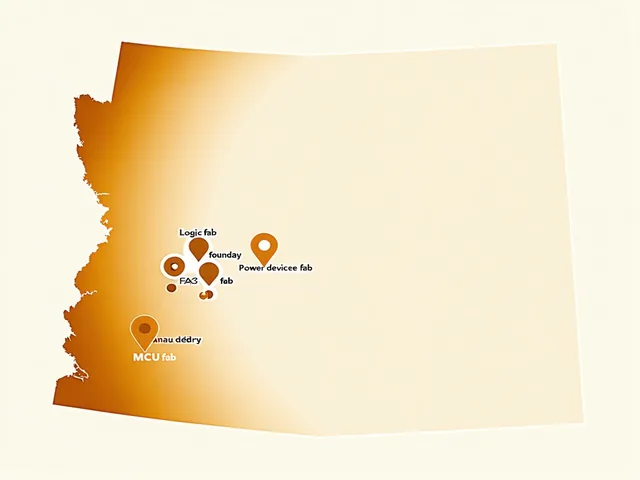

"Defect classification was a manual step everyone in the fab accepted as slow. We thought: if the model is trained on the right patterns, it should be faster and more consistent than a human review."
Jonas Falk, Founder — Jonas built Wafertune after spending five years on wafer defect analysis tools in computational imaging research.
Latest from Wafertune
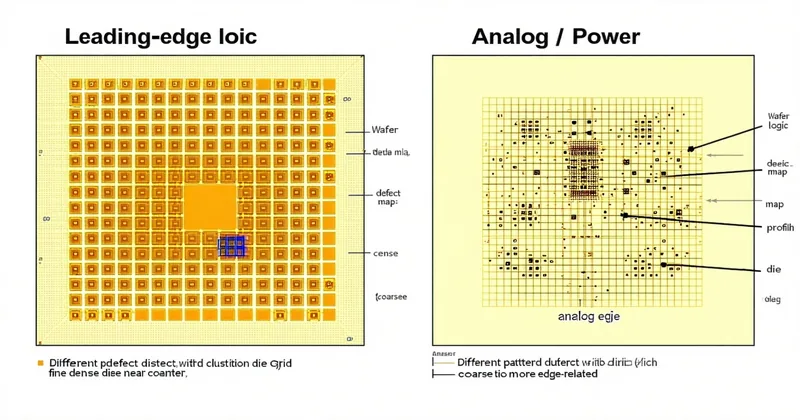
Analog and power nodes have different dominant defect mechanisms than leading-edge logic. This affects what patterns your model needs to recognize.
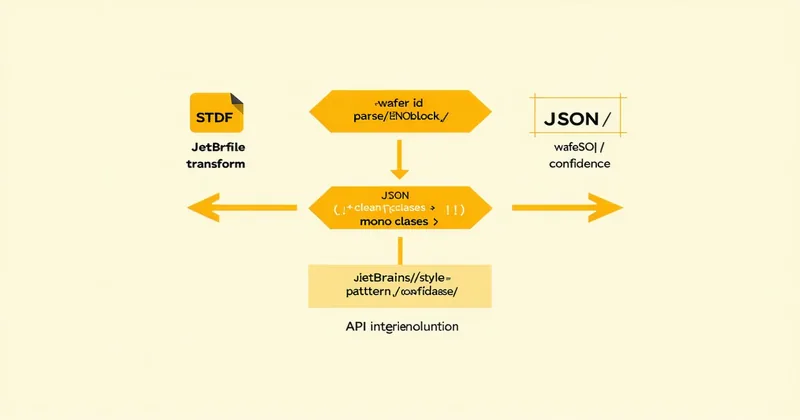
A practical guide to parsing STDF wafer-sort data and structuring it for the Wafertune classification API — common pitfalls and field mapping.
Start classifying your defect patterns.
Pilot tier includes 500 classifications per month, free.
Request Pilot AccessNo credit card. No installation. API key delivered within 24 hours.